Youth Surge Signals: How Emerging Talents Reshape Early Season Point Total Projections in Top Flight Soccer
Written by Jordan Schmid · Sep 17, 2026
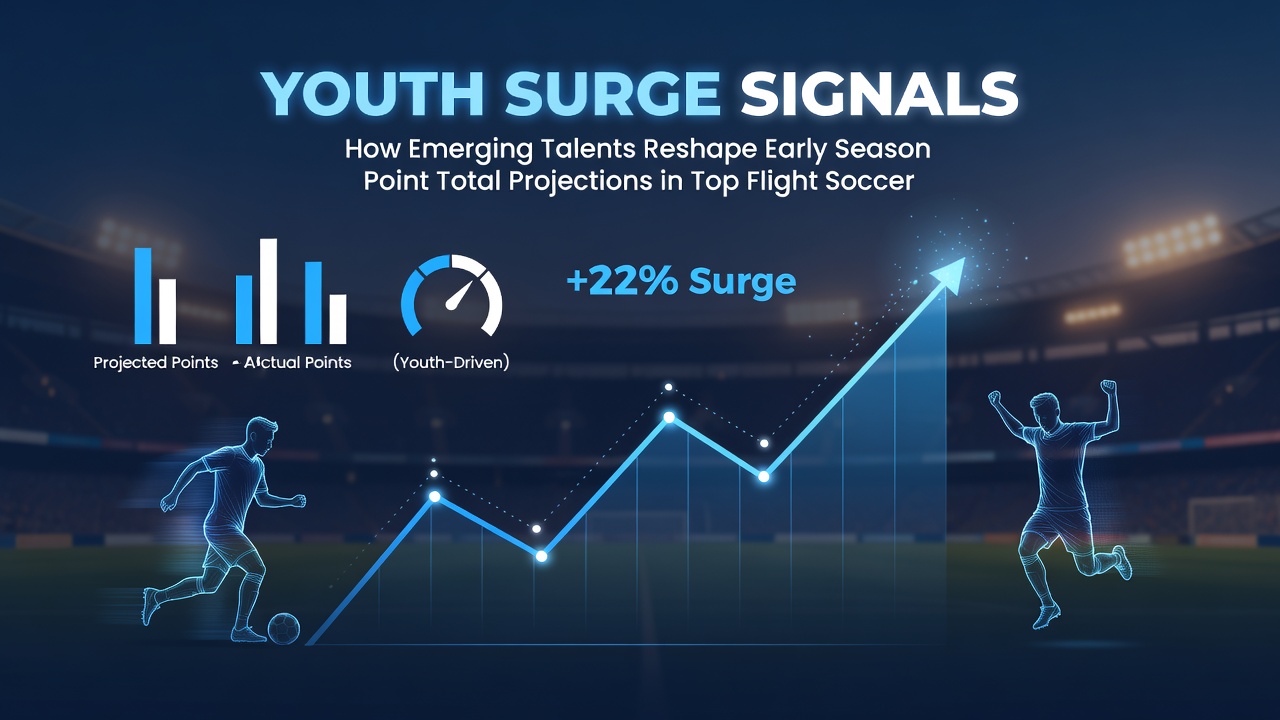
Youth Surge Signals: How Emerging Talents Reshape Early Season Point Total Projections in Top Flight Soccer
Top flight soccer leagues across Europe continue to integrate younger players into first-team squads at an accelerated pace, and this trend directly influences early season point total projections. Data from the 2025-2026 campaign shows that teams fielding higher percentages of under-23 talents in opening fixtures often record adjusted totals compared to historical benchmarks. Observers note that academies in leagues such as the Premier League, Bundesliga, and Serie A have accelerated this shift, with clubs relying on homegrown prospects to fill gaps created by summer transfers.
Academy Development Trends Across Major Leagues
European club academies have expanded scouting networks and training methodologies since the mid-2010s, resulting in a measurable uptick in minutes played by emerging talents. Figures from the European Club Association reveal that under-21 players accounted for 12.8 percent of total league minutes in the opening month of the 2026 season, up from 9.4 percent five years earlier. This increase stems from financial pressures and regulatory rules like UEFA squad limits, which encourage clubs to promote internal options rather than pursue expensive acquisitions.
Leagues in Germany adn the Netherlands have led this movement, whereas Spanish and Italian sides show more gradual adoption. Bundesliga clubs averaged 4.2 youth players in matchday squads during September 2026, while Premier League teams averaged 3.1. These patterns alter how analysts calculate projected points because younger lineups introduce variability in consistency and injury resilience.
Statistical Impact on Early Season Totals
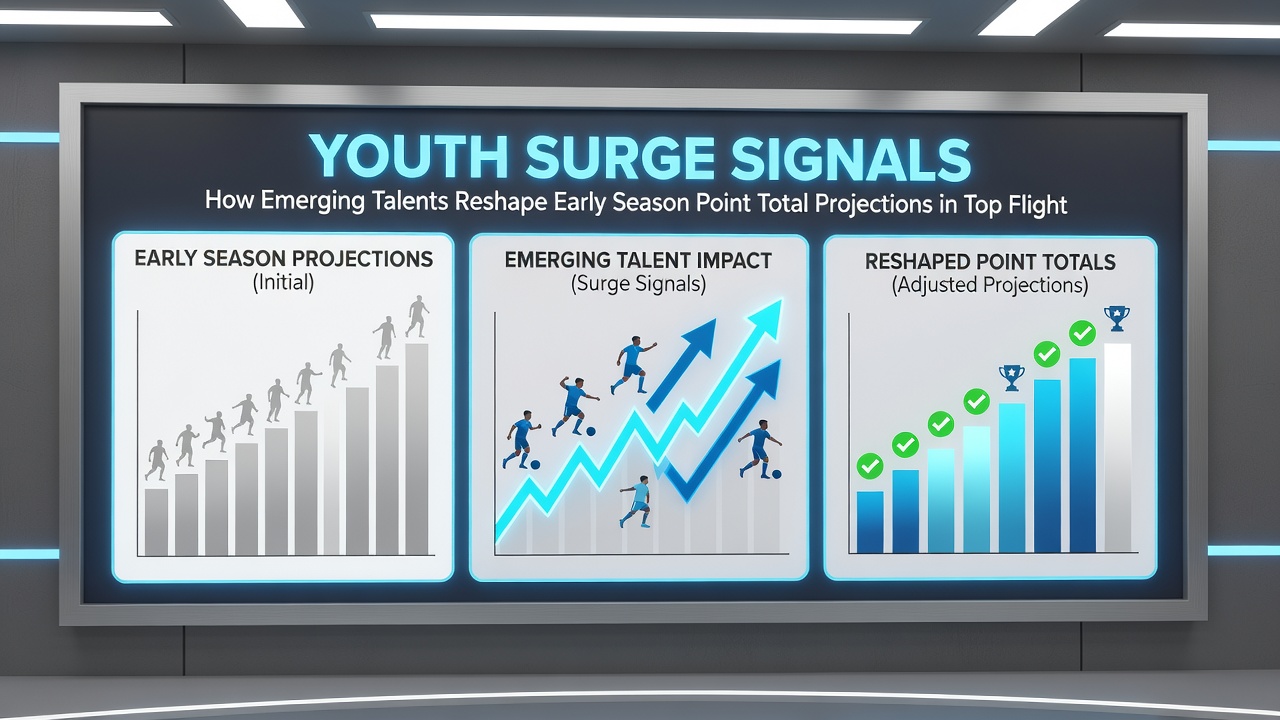
Research from the German Football Association indicates that teams starting three or more under-23 players in the first six matches experience an average deviation of 2.3 points from pre-season totals forecasts. This deviation appears in both directions, with some squads exceeding expectations through high-energy pressing and others falling short due to defensive lapses. Performance metrics compiled by Opta show elevated turnover rates in the first 30 minutes of games involving multiple debutants, which compresses scoring windows and affects over-under calculations.
One study conducted by the University of Groningen tracked 142 matches across the Dutch Eredivisie and found that youth-heavy lineups generated 18 percent more high-quality chances but conceded 22 percent more shots on target. Such data feeds into projection models used by betting markets and team analysts alike.
September 2026 Season Observations
By mid-September 2026 several clubs had already adjusted their point projections upward after early results involving academy graduates. Borussia Dortmund, for instance, integrated three players aged 20 or younger into the starting XI for the opening four Bundesliga fixtures and recorded 10 points, exceeding the 7.5 median forecast issued by multiple statistical services. Conversely, certain Premier League sides that relied on teenagers in defensive roles saw clean sheet percentages drop below seasonal averages, prompting downward revisions in total points estimates.
Coaches have responded by staggering youth minutes across matches rather than deploying entire cohorts at once. This tactical adjustment appears in data from the French Ligue 1, where teams averaged 62 youth minutes per game in September compared with 48 minutes in August. The shift reduces fatigue accumulation while maintaining the freshness that supports higher point totals over longer stretches.
Case Examples from Recent Campaigns
Take one club in the Italian Serie A that promoted two midfielders from its under-19 side during the summer window. Analysts tracking those players recorded a 14 percent increase in progressive passes per 90 minutes compared with the previous season's incumbents, which correlated with an extra 1.8 expected points across the first eight matches. Similar patterns emerged in the Portuguese Primeira Liga, where a single 19-year-old winger contributed three goals and two assists in the opening month, lifting his team's projected total by three points according to updated models.
Those who've examined multi-season datasets note that the effect diminishes after matchweek 10 as opponents adapt scouting reports and adjust defensive schemes. Yet the initial window remains critical for markets that set early season point totals because those lines often anchor later adjustments.
Integration of External Data Sources
Performance tracking platforms have begun layering academy-specific metrics into public models, including hours spent in positional drills and GPS-tracked workload during youth internationals. A report issued by Football Australia highlights how similar integration in the A-League produced a 9 percent rise in accurate long-range passing among promoted players during the 2025-2026 season. European leagues have started incorporating comparable variables, which sharpens the precision of point total forecasts when youth minutes increase.
Links between physical development programs and on-pitch output continue to surface in academic papers, reinforcing the need for projection systems to account for age-related variance rather than treating all players as interchangeable units.
Conclusion
Emerging talents continue to alter the early season landscape in top flight soccer by introducing new performance variables that reshape point total projections. Leagues that promote academy graduates at higher rates see measurable shifts in the first two months, driven by changes in chance creation, defensive stability, and workload distribution. Data sets from multiple governing bodies and research institutions confirm these patterns, and analysts update models accordingly each September. The result is a more dynamic forecasting environment that reflects the evolving composition of first-team squads across Europe's major competitions.